
Using the Free Resources
Record Everything
The Captain's Log
A ship at sea demands vigilance. The wind shifts, provisions run low, and the crew must act with precision. So it is with household spending. Your log is not a dusty ledger in a drawer—it’s alive, like the course you chart under sail. Each entry is a rope tightened, a sail trimmed, a lookout’s call. Without it, even in calm seas, you drift. With it, you command the helm.
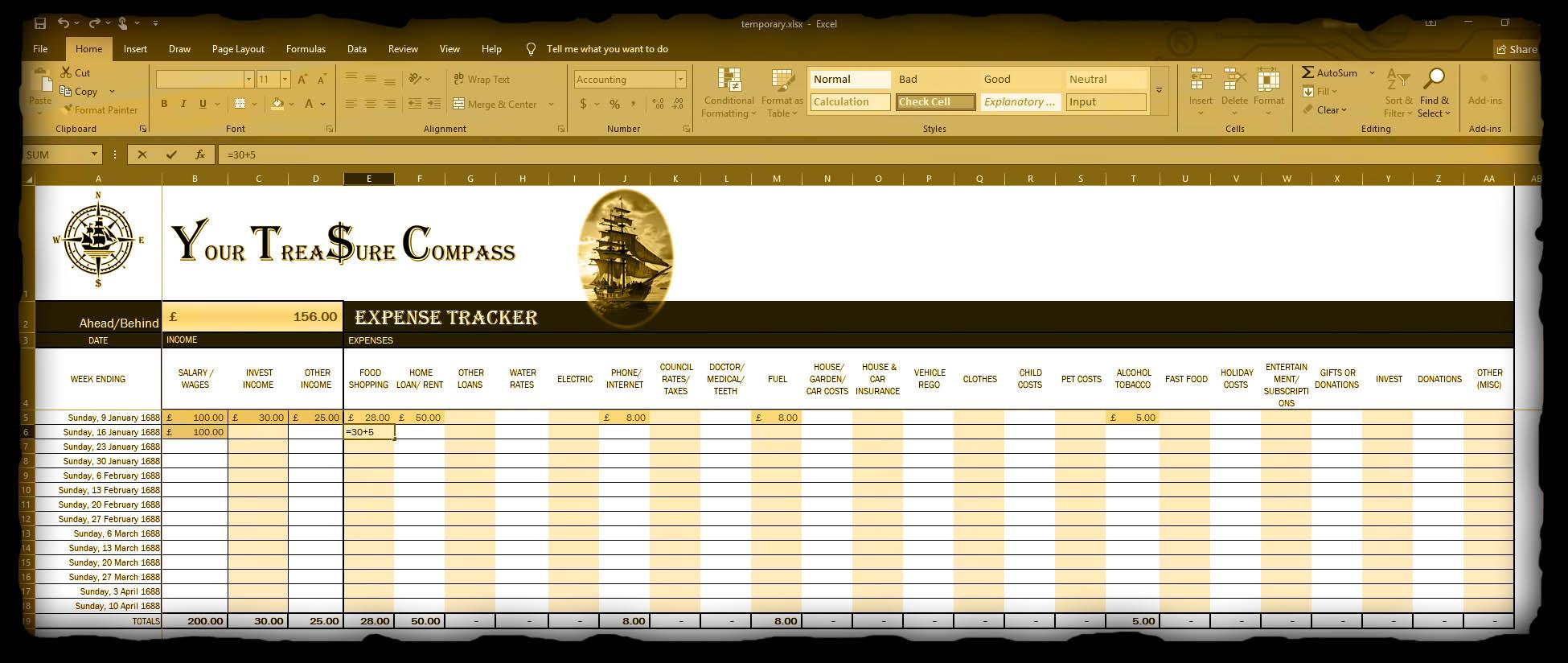
Get Instant Access to Your Free Expense Tracker, Balance Sheet Templates & more
Just fill out the form below to download your templates.
If you’d like, you can opt-in for occasional updates, helpful reminders, or extra tools to help you stay on track.
How to use the free downloads
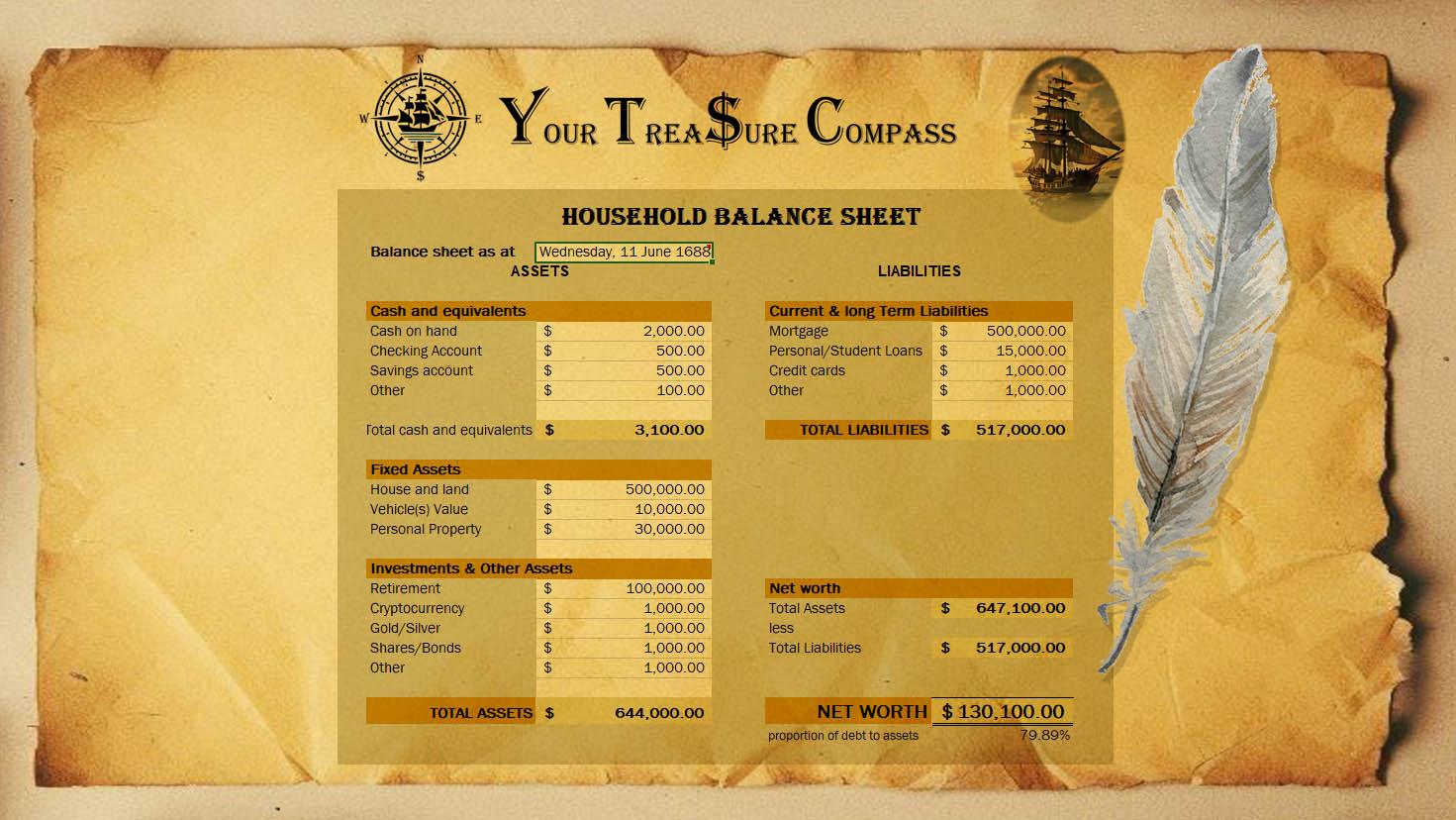
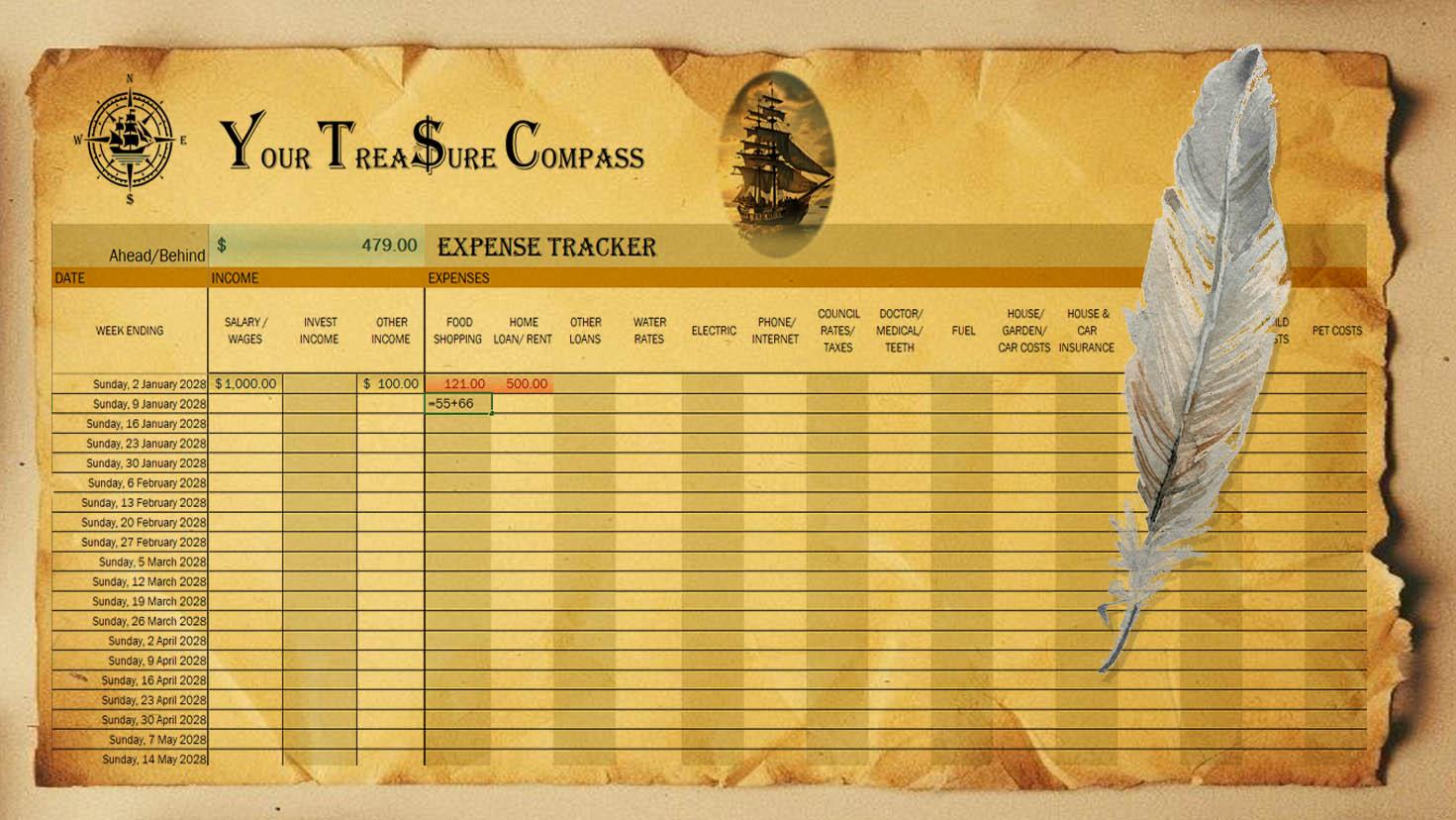
Description What you own vs what you owe
Frequency: Quarterly
Shows: Your current situation
Effort: Low
Description: Accurate record of income and expenses
Frequency: Daily
Shows: Detailed inflows and outflows
Effort: Higher
As you discovered on Budget Island, in order for us to chart a course you absolutely need to track everything. It’s a pain but the payoff is immense. Your Treasure Compass has provided you with the resources necessary to get started. The most important tool is the expense tracker. It is a simple spreadsheet that you will open EVERY SINGLE DAY! In it you will record what you have spent for that day to the penny. If you miss a day, you will make sure to catch up as soon as is possible. Your future success is wholly dependent on this. If you achieve nothing else, achieve this daily. You’ll make it your most important habit and never stop.
Remember though, an expense tracker is not a budget. A budget is a forward-looking plan where you want your income and expenses to go. An expense tracker is a backward-looking record of the actual incomings and outgoings. A budget is useless without first getting a handle on this.
Psychologically, a budget usually fails as there are many ways it can be knocked off course.
The only way an expense tracker fails is if you neglect it. Used together, they’re a powerhouse. You plan with the budget, then track with the expense tracker to adjust and improve.
The other important measuring tool is the balance sheet. It’s important to a business as much as it is important to a household. Do this monthly or quarterly. It gives you a clear snapshot of your financial situation and over time can show the course you have charted. Your Treasure Compass has also provided a template below.
If you have Microsoft Excel then great, if you don’t, no problem, Google provides free software called Google Sheets which works almost exactly the same and all you need to do is set up a google account. Easy.
If you don’t feel comfortable with spreadsheets then there are apps you can download that will make expense tracking easy (too easy in my opinion). There’s nothing wrong with good old-fashioned paper and pen either!
If you are comfortable with excel or google sheets you may want to set up your own one rather than use the template provided. Whatever works for you, as long as you actually open it every day and record all your expenses.
The Expense Tracker
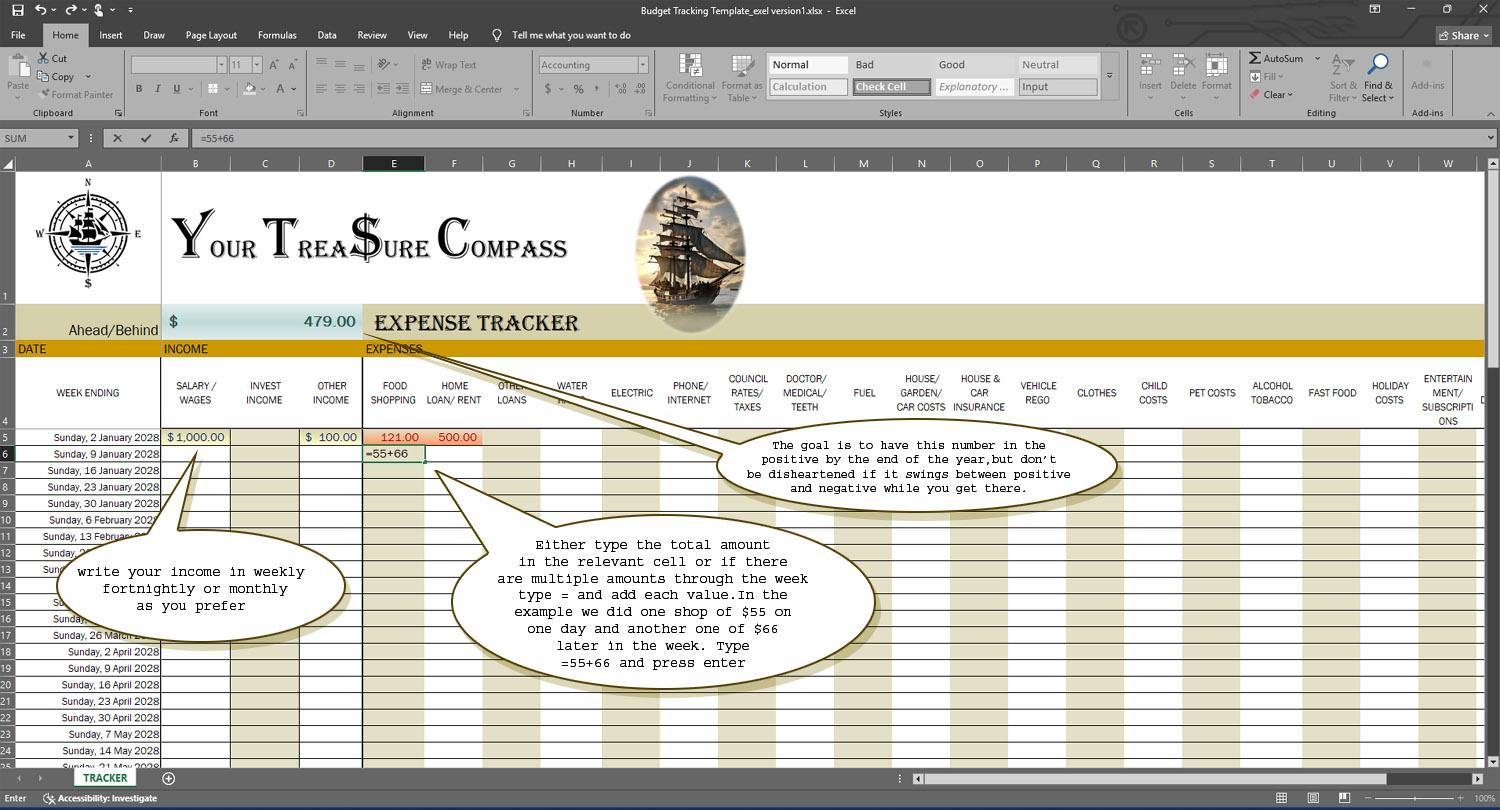
Step 1: Download the template to your computer and save the file where you will easily find it again. If you don’t have microsoft Excel then create a google account so you have access to the google suite of tools including Google Sheets. Excel and Google Sheets work in a very similar way to each other.
Step 2: Clear the sample numbers on the sheet so that you are starting with a clean sheet.
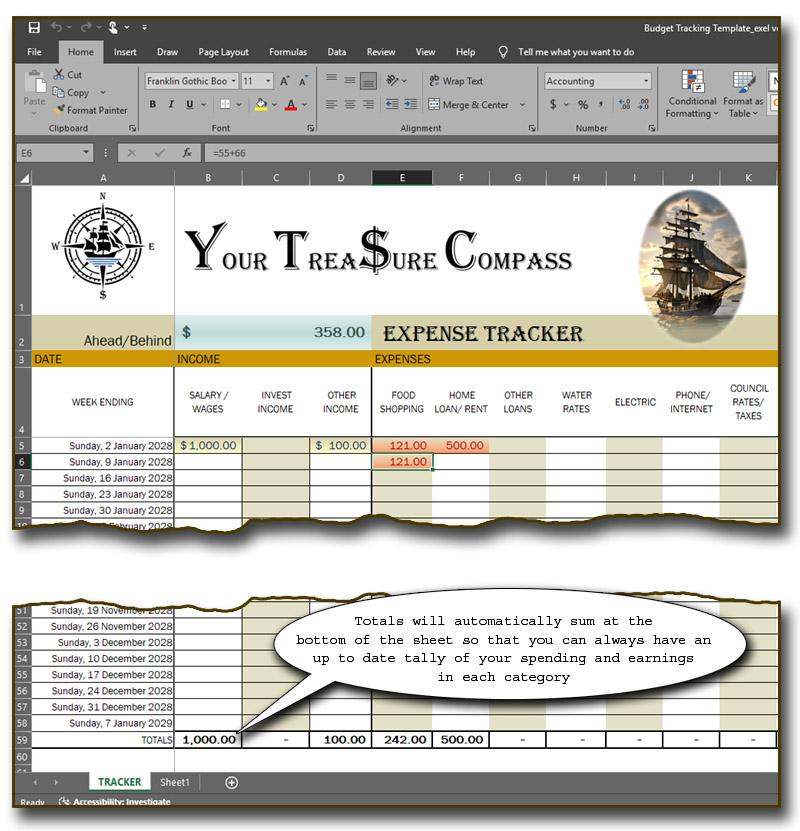
Step 3: in the first date cell write the date of your next approaching Sunday. This will automatically populate the remaining cells with each Sunday’s date. This expense tracker is split into weekly timeframes.
Step 4: alter any expense or income headings if you would like to make it more suited to your personal situation. The more personalized you make it the more useful it will be to you. While the “other (misc)” heading will be very useful, try to be frugal with its use. If you must use it right click your mouse and add a note or comment with details of the actual transaction.
Step 5: Look at what you spent today and type it into the relevant cells. If there is just one amount then type it in. For example, if you did a food shop of $300 then simply type 300 in the food shopping cell in the appropriate week. If perhaps both you and your partner both filled a car each with petrol for that day, one spending $75 and the other spending $60, then in the Fuel section you will type =75+60
By typing an “=” sign it indicates to the spreadsheet that you are doing a calculation. This is about as complicated as you need to get. If you want to ‘nerd out’ though there are many things you can do to make your spreadsheet even better, from complicated formulas to graphs and charts. Again, make it your own. The more effort you put in the greater the reward later on.
You’ll see there is a cell marked “Ahead/Behind” that keeps a tally of the difference between your costs and your income. It turns red if your costs are higher than your income and green if the other way around. Don’t get too despondent if you see it alternate through the year. You might be doing alright and then you have a roof repair or a car fail or any number of things that take a chunk of your savings in one hit.
Remember:
1. You are playing the long game.
2. You will be building up a cash reserve to act as a buffer for just such emergencies. This will take the sting out of it and ensure your not left destitute by something unexpected.
3. Review your spending habits regularly and revisit Frugality Fort to see where you can cut back.
At the bottom of the sheet you’ll see tallies showing the total you’ve spent in each category so far.
Backup your file regularly on to a separate hard drive (Google is cloud based so you won’t need to do this).
When the year is over, save the file for that year and then start again. Over time you will build up a record of everything you have ever spent and earned. This information will become extremely valuable to you.
The Balance Sheet
You will have heard of a balance sheet as an accounting term for businesses. I bet you never thought of applying it to your own household.
Remember, not only are you steering a mighty ship through the financial waters, you’re also treating your household like business and there are many tools that are just as useful to us as they are to a big company.
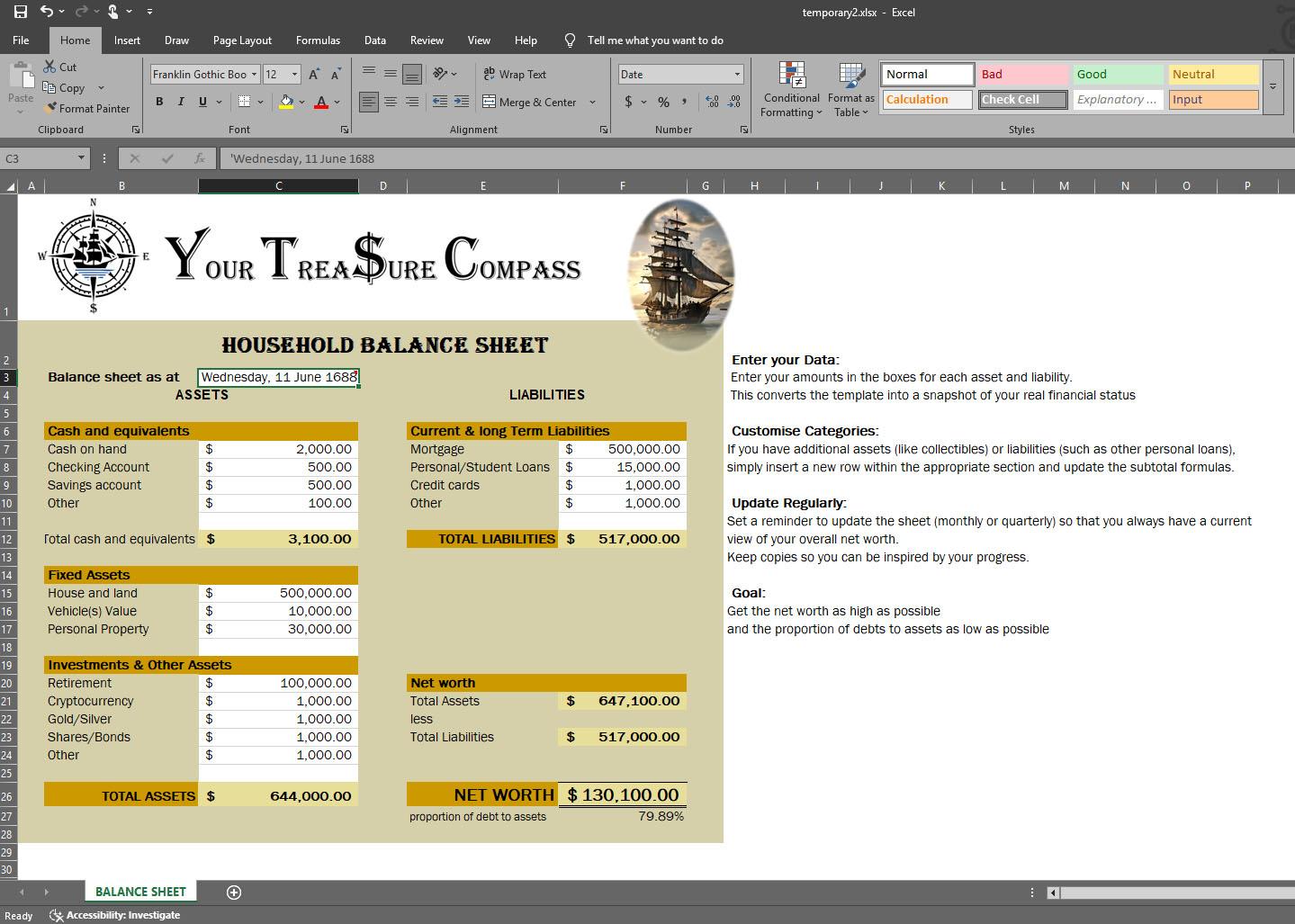
A household balance sheet is like a snapshot of your financial health at a specific moment in time. It shows what you own, what you owe, and what’s left over—your net worth.
Over time is can be a record of how far you’ve come. The whole point of “Your Treasure Compass” is to grow your net worth and then use those assets to increase your net worth even further. This is why the rich get richer and the poor get poorer. Keep a record of your net worth as regularly as you can. The goal is to grow it every year. There is no limit.
By downloading the Your Treasure Compass balance sheet template all you need to do is enter the date and then enter the values into the white cells to calculate your net worth.
Be extremely conservative with your estimates of value. For example, you might think your car is worth $30,000 so maybe put it down as $20,000 and then each year knock a little off to account for depreciation due extra mileage and wear and tear. It is much better to underestimate than overestimate the value of your property. It allows you to hope for the best and plan for the worst.
Save your file to your computer and also to a backup drive regularly (again, Google drive is cloud based so the data is backed up externally)
The Savings Buckets
To learn more about the bucket method of saving, make sure you visit Bucket Bay!
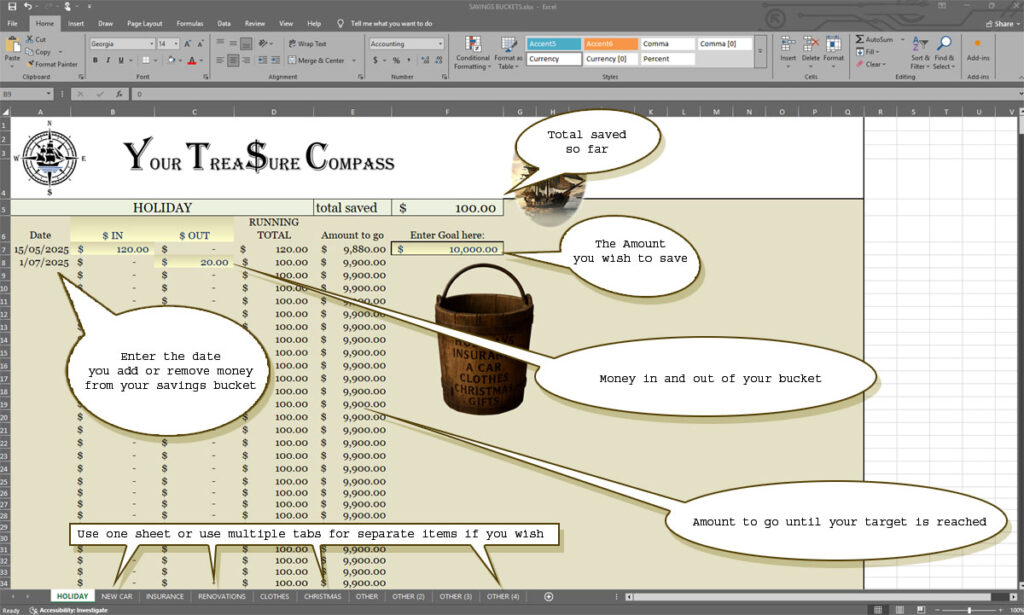
A simple yet powerful way to assign your money to specific tasks. With a limited income, there are only so many directions we can steer our resources. While peace of mind and financial security are vital, so too are moments of joy and things to look forward to. Allocating your income into defined “buckets” allows you to balance these competing priorities and move forward with clarity.
Journey to Wealth -Treasure Map
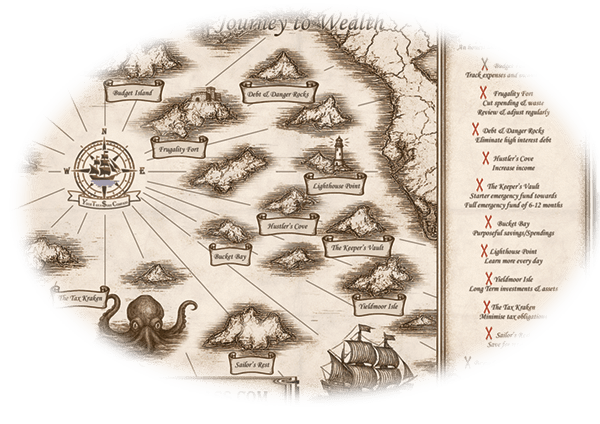
A printable PDF map that shows the order of operations to achieve financial freedom and security
To Access these Templates enter details below